ADVERTISEMENT
Sweet Condensed Milk Bread
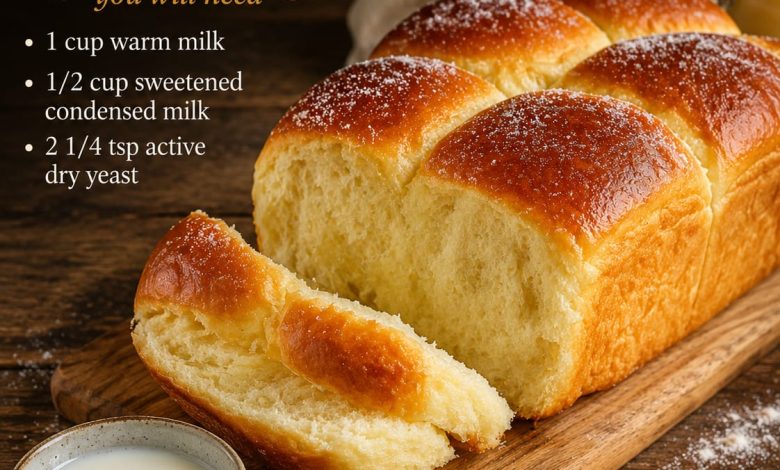
Sweet Condensed Milk Bread is a beautifully soft, fluffy homemade bread with a tender crumb, a lightly sweet flavor, and a shiny golden crust. Sweetened condensed milk gives the dough a subtle richness that ordinary sandwich bread does not have, while milk and butter help create an exceptionally soft texture.
This bread is wonderful served warm from the oven, especially when pulled apart into thick, pillowy pieces. It works beautifully for breakfast with butter or jam, as an afternoon snack with coffee or tea, or even as the base for French toast. Although yeast bread requires some patience while the dough rises, the preparation itself is straightforward, and the finished loaf is well worth the wait.
Ingredients
For the Bread Dough
1 cup warm whole milk
½ cup sweetened condensed milk
2¼ teaspoons active dry yeast
1 large egg
¼ cup granulated sugar
4 tablespoons unsalted butter, softened
3½ to 4 cups all-purpose flour
1 teaspoon salt
1 teaspoon vanilla extract, optional
For the Egg Wash
1 large egg
1 tablespoon milk
For Finishing
2 tablespoons melted butter
1 tablespoon sweetened condensed milk, optional
Powdered sugar, optional
ADVERTISEMENT
Preparation
1. Activate the Yeast
Pour the warm milk into a large mixing bowl. The milk should feel comfortably warm but not hot, ideally around 105–110°F (40–43°C).
Add the yeast along with about one teaspoon of the sugar.
Stir gently and allow the mixture to rest for approximately 5–10 minutes.
The surface should become slightly foamy. This indicates that the yeast is active and ready to use.
If nothing happens after 10 minutes, the yeast may be inactive or the milk may have been too hot or too cold.
ADVERTISEMENT
2. Add the Condensed Milk
Pour the sweetened condensed milk into the activated yeast mixture.
Add the egg, remaining sugar, softened butter, and vanilla extract if using.
Whisk until everything is well combined.
The condensed milk provides both sweetness and richness, helping create the characteristic tender texture of this bread.
3. Add the Flour
Add approximately 3 cups of flour and the salt.
ADVERTISEMENT
Mix with a wooden spoon or the dough hook of a stand mixer until a soft dough begins to form.
Gradually add additional flour, a little at a time, until the dough pulls away from the sides of the bowl.
Avoid adding too much flour. The dough should remain slightly soft and tacky rather than becoming dry or stiff.
4. Knead the Dough
Transfer the dough to a lightly floured surface.
Knead by hand for approximately 8–10 minutes, or use a stand mixer with a dough hook for about 6–8 minutes.
ADVERTISEMENT
The finished dough should be smooth, elastic, and soft.
To test it, gently stretch a small piece between your fingers. Properly kneaded dough should stretch thinly before tearing.
5. First Rise
Lightly grease a large bowl with butter or oil.
Shape the dough into a ball and place it inside the bowl, turning once so the surface is lightly coated.
Cover the bowl with plastic wrap or a clean kitchen towel.
Place it in a warm, draft-free area and allow the dough to rise for approximately 1–1½ hours, or until doubled in size.
The exact rising time will depend on the temperature of your kitchen.
Shape the Bread
Once the dough has doubled, gently press it down to release excess air.
Transfer it to a clean work surface.
ADVERTISEMENT
Divide the dough into 4–6 equal portions, depending on the appearance you want.
Shape each portion into a smooth ball by pulling the edges underneath and gently rolling it against the work surface.
Grease a standard loaf pan and arrange the dough balls closely together inside.
As they rise and bake, they will join together while still creating beautiful pull-apart sections.
6. Second Rise
Cover the loaf pan loosely with a clean towel.
Allow the shaped dough to rise for another 35–50 minutes, or until noticeably puffy and almost doubled.
Meanwhile, preheat the oven to 350°F (175°C).
Do not allow the dough to rise excessively above the pan, as over-proofed dough can collapse during baking.
7. Prepare the Egg Wash
Whisk together one egg and one tablespoon of milk.
Very gently brush the mixture over the surface of the risen dough.
The egg wash helps create the glossy, deep golden-brown crust that makes this bread especially attractive.
8. Bake the Bread
Place the loaf in the preheated oven and bake for approximately 25–35 minutes.
The top should become beautifully golden brown.
If it starts browning too quickly before the center is fully baked, loosely cover the loaf with aluminum foil during the final 10 minutes.
The bread is done when the center reaches approximately 190°F (88°C) or when the loaf sounds slightly hollow when tapped.
9. Add the Finishing Glaze
Remove the bread from the oven.
While it is still warm, brush the top generously with melted butter.
For an even richer condensed-milk flavor, mix the melted butter with a tablespoon of sweetened condensed milk before brushing it over the loaf.
This gives the crust a soft, slightly glossy finish.
Allow the bread to cool in the pan for approximately 10 minutes before transferring it to a wire rack.
Tips for Extra-Soft Bread
The amount of flour can vary slightly depending on humidity and the type of flour being used. Add only enough to create a manageable dough. A softer dough generally produces a softer loaf.
Make sure the milk is warm rather than hot. Excessive heat can kill the yeast and prevent the dough from rising.
Give the dough enough time during both rises. Yeast works according to temperature rather than an exact clock, so look for the dough to approximately double in volume.
Avoid overbaking. Once the loaf is fully cooked and golden, remove it from the oven to preserve its soft interior.
Brushing the bread with melted butter immediately after baking also helps keep the crust tender.
Serving Suggestions
Sweet Condensed Milk Bread is especially delicious while still slightly warm.
Pull apart one of the fluffy sections and spread it with softened butter, strawberry jam, honey, or additional condensed milk.
For breakfast, serve it alongside fresh fruit and coffee or tea.
The bread also makes excellent French toast. Its slightly sweet, rich crumb absorbs the custard beautifully while maintaining enough structure to become golden and crisp on the outside.
Leftover slices can even be toasted and topped with butter and cinnamon sugar for a quick sweet snack.
Storage
Once completely cooled, store the bread in an airtight container or tightly wrapped at room temperature for approximately 2–3 days.
To restore its fresh-baked softness, warm individual pieces for several seconds in the microwave or briefly in a low oven.
The bread can also be frozen. Wrap the cooled loaf or individual portions tightly and freeze for up to 2 months. Allow it to thaw at room temperature before gently reheating.
Conclusion
Sweet Condensed Milk Bread is a wonderful homemade loaf for anyone who loves exceptionally soft and slightly sweet bread. Sweetened condensed milk adds richness and a delicate milky sweetness, while butter, milk, and egg create a tender, fluffy crumb.
Its beautiful golden crust hides an incredibly soft interior that can be pulled apart almost effortlessly. Served warm with butter, jam, honey, or a little extra condensed milk, it is simple comfort food at its best.
Whether you prepare it for breakfast, an afternoon treat, or simply because you want the aroma of freshly baked bread filling the kitchen, this soft and pillowy condensed milk bread is a recipe worth making again and again.