ADVERTISEMENT
Classic French Coq au Vin – Braised Chicken in Red Wine Sauce
Introduction
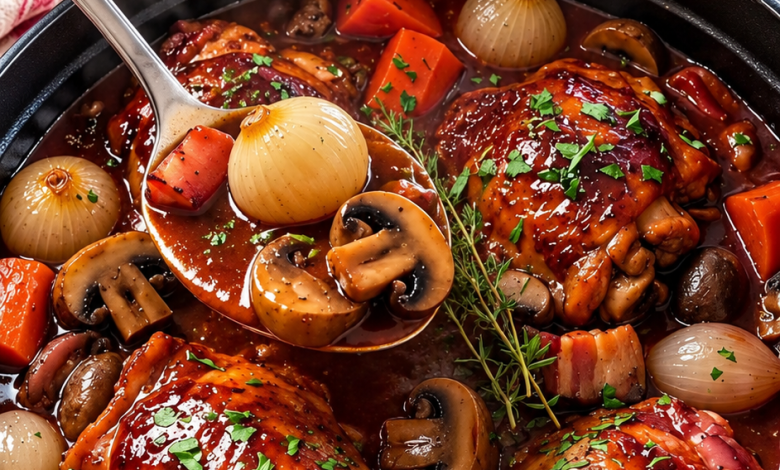
Few dishes capture the warmth and elegance of traditional French home cooking quite like Classic Coq au Vin. This comforting recipe features tender chicken slowly braised in a rich red wine sauce with smoky bacon, sweet pearl onions, earthy mushrooms, and carrots. Every ingredient works together to create a deeply flavorful meal that feels both rustic and sophisticated.
Originally a traditional French countryside dish, Coq au Vin has become a beloved comfort food around the world. The secret to its wonderful flavor is the slow cooking process, which allows the chicken to absorb the aromas of red wine, garlic, thyme, and rosemary while becoming incredibly tender.
The sauce is what truly makes this dish special. As the chicken simmers, the wine combines with chicken broth, vegetables, and savory bacon to create a glossy, rich sauce that coats every piece beautifully.
Although this recipe looks impressive enough for a special dinner, it can easily be prepared at home with simple ingredients and a little patience. Whether you’re planning a cozy Sunday dinner, entertaining guests, or preparing a comforting family meal, this homemade Coq au Vin is sure to impress.
Recipe Information
Preparation Time: 25 minutes
Cooking Time: 1 hour 15 minutes
ADVERTISEMENT
Total Time: Approximately 1 hour 40 minutes
Servings: 4–6
Difficulty: Intermediate
Cooking Method: Stovetop braising
Ingredients
For the Chicken
6 bone-in, skin-on chicken thighs (approximately 2½–3 pounds)
ADVERTISEMENT
6 oz (170 g) thick-cut bacon, chopped
2 tablespoons olive oil, if needed
1 teaspoon salt
½ teaspoon freshly ground black pepper
For the Vegetables
12–15 pearl onions, peeled
ADVERTISEMENT
8 oz (225 g) cremini mushrooms, halved
3 medium carrots, peeled and cut into thick pieces
4 garlic cloves, minced
1 medium yellow onion, finely chopped
For the Red Wine Sauce
2 cups (480 ml) dry red wine
ADVERTISEMENT
1½ cups (360 ml) low-sodium chicken broth
2 tablespoons tomato paste
2 tablespoons all-purpose flour
2 tablespoons unsalted butter
2 sprigs fresh thyme
1 sprig fresh rosemary
2 bay leaves
1 teaspoon brown sugar, optional
For Garnishing
2 tablespoons fresh parsley, finely chopped
ADVERTISEMENT
Freshly ground black pepper
Fresh thyme leaves, optional
Preparation Steps
Step 1: Prepare the Chicken
Remove the chicken thighs from the refrigerator approximately 15 minutes before cooking.
Pat them thoroughly dry using paper towels.
Season both sides with salt and freshly ground black pepper.
Drying the chicken helps the skin develop a beautiful golden-brown crust during searing.
Step 2: Prepare the Vegetables
Peel the pearl onions and leave them whole.
Wash the mushrooms and cut larger ones in half.
Peel the carrots and slice them into thick pieces.
Finely chop the yellow onion and mince the garlic.
Keeping the vegetables relatively large helps them maintain their shape during the slow braising process.
Step 3: Cook the Bacon
Place a large, heavy-bottomed Dutch oven or deep skillet over medium heat.
Add the chopped bacon and cook for approximately 6–8 minutes, stirring occasionally.
Continue until the bacon becomes golden and slightly crispy.
Using a slotted spoon, transfer the bacon to a plate.
Leave approximately 2 tablespoons of rendered bacon fat in the pot.
Step 4: Sear the Chicken
Increase the heat to medium-high.
Place the seasoned chicken thighs into the hot pot, skin-side down.
Cook for approximately 5–6 minutes until the skin develops a deep golden-brown color.
Turn the chicken and cook for another 3–4 minutes.
The chicken does not need to be fully cooked at this stage because it will finish cooking in the sauce.
Transfer the browned chicken to a plate.
Step 5: Sauté the Pearl Onions
Reduce the heat to medium.
Add the peeled pearl onions to the same pot.
Cook for approximately 4–5 minutes, turning occasionally until lightly golden.
Remove the onions and set them aside.
Step 6: Cook the Mushrooms
Add the halved mushrooms to the pot.
Cook for approximately 5 minutes until they release their moisture and begin to brown.
Avoid stirring constantly so the mushrooms can develop a flavorful golden surface.
Transfer the mushrooms to a plate.
Step 7: Cook the Carrots and Onion
Add the chopped yellow onion and carrot pieces to the pot.
If the pot appears dry, add a little olive oil.
Cook for approximately 5 minutes until the onion softens and the carrots begin to develop color.
Step 8: Add the Garlic
Stir in the minced garlic.
Cook for approximately 30 seconds until fragrant.
Be careful not to burn the garlic, as it can develop a bitter flavor.
Step 9: Add the Tomato Paste
Add the tomato paste to the vegetables.
Stir continuously for approximately 1–2 minutes.
Cooking the tomato paste helps deepen its flavor and adds richness to the finished sauce.
Step 10: Add the Flour
Sprinkle the all-purpose flour over the vegetables.
Stir until the flour is evenly distributed.
Cook for approximately 1 minute to remove the raw flour taste.
This will help thicken the sauce during braising.
Step 11: Pour in the Red Wine
Slowly pour the red wine into the pot while stirring.
Use a wooden spoon to scrape the bottom of the pot, releasing the browned bits left behind from cooking the chicken and bacon.
These flavorful browned bits add wonderful depth to the sauce.
Bring the wine mixture to a gentle simmer and cook for approximately 5 minutes.
Step 12: Add the Chicken Broth
Pour in the chicken broth.
Stir until the sauce becomes smooth.
Add the fresh thyme, rosemary, and bay leaves.
If desired, stir in the brown sugar to balance the acidity of the wine.
Step 13: Return the Chicken to the Pot
Carefully place the browned chicken thighs back into the pot.
Arrange them in a single layer whenever possible.
Spoon some of the sauce over the chicken.
The liquid should surround most of the chicken without completely covering the skin.
Step 14: Begin the Slow Braising Process
Bring the sauce to a gentle simmer.
Reduce the heat to low.
Cover the pot with a lid and cook for approximately 35 minutes.
The chicken will slowly absorb the flavors of the wine, herbs, and vegetables.
Avoid boiling vigorously, as gentle simmering helps keep the meat tender.
Step 15: Add the Pearl Onions and Mushrooms
After the chicken has simmered for approximately 35 minutes, add the browned pearl onions and mushrooms.
Return the cooked bacon to the pot.
Gently stir the vegetables into the sauce without breaking the chicken pieces.
Step 16: Continue Cooking
Cover the pot again and simmer for another 15–20 minutes.
The chicken should become tender, and the vegetables should be fully cooked.
Check the chicken with a meat thermometer. It must reach at least 165°F (74°C) internally, although thighs often become more tender at a slightly higher temperature.
Step 17: Reduce the Sauce
Once the chicken is cooked, carefully transfer it to a serving plate if the sauce needs additional thickening.
Remove the bay leaves and herb stems.
Increase the heat to medium and allow the sauce to simmer uncovered for approximately 5–10 minutes.
Stir occasionally until the sauce reaches a rich, glossy consistency.
Step 18: Finish With Butter
Reduce the heat to low.
Add the unsalted butter and gently stir until completely melted.
This final addition gives the sauce a smooth texture and beautiful shine.
Taste and adjust the salt and black pepper.
Step 19: Return the Chicken to the Sauce
Place the chicken back into the pot.
Spoon the thickened red wine sauce over the chicken.
Allow everything to warm together for approximately 2–3 minutes.
Step 20: Garnish and Serve
Sprinkle freshly chopped parsley over the chicken.
Add a little freshly ground black pepper and fresh thyme if desired.
Serve warm directly from the pot or transfer to a large serving platter.
Helpful Cooking Tips
1. Choose the Right Chicken
Bone-in, skin-on chicken thighs are ideal because they remain juicy and tender during slow cooking.
2. Use a Dry Red Wine
Pinot Noir, Merlot, or another dry red wine works well. Choose a wine suitable for cooking that has a balanced flavor.
3. Brown the Chicken Properly
Searing the chicken creates a rich flavor and beautiful color.
4. Do Not Rush the Braising Process
Slow, gentle cooking allows the chicken to become tender and absorb the sauce.
5. Use Fresh Herbs
Fresh thyme and rosemary give the dish a wonderful aroma.
6. Brown the Mushrooms Separately
This improves their flavor and prevents them from becoming overly soft.
7. Adjust the Sauce Consistency
If the sauce is too thin, simmer uncovered until reduced. If it becomes too thick, add a little chicken broth.
8. Prepare Ahead
Coq au Vin often develops even deeper flavor after resting overnight in the refrigerator.
Delicious Recipe Variations
Coq au Vin With Chicken Breast
Boneless chicken breasts can be used, but they require a shorter cooking time to prevent dryness.
Extra Mushroom Coq au Vin
Increase the mushrooms to 12 oz for a richer, earthier flavor.
Coq au Vin With Potatoes
Add small baby potatoes during the braising process for a more complete one-pot meal.
Herb-Rich Coq au Vin
Add extra fresh thyme and a small amount of parsley during cooking.
Alcohol-Free Braised Chicken
Replace the red wine with additional chicken broth and a modest amount of unsweetened red grape juice, plus 1–2 tablespoons of red wine vinegar for acidity.
This variation produces a different flavor from traditional Coq au Vin but remains delicious.
Serving Suggestions
Classic Coq au Vin pairs beautifully with several comforting side dishes.
Creamy Mashed Potatoes
The rich sauce tastes wonderful spooned over fluffy mashed potatoes.
Buttered Egg Noodles
Serve the chicken over warm egg noodles to absorb the delicious sauce.
Crusty French Bread
Fresh bread is perfect for soaking up every drop of the savory red wine sauce.
Roasted Potatoes
Golden roasted potatoes provide a satisfying contrast to the tender chicken.
Steamed Green Beans
Fresh green beans add color and balance the richness of the dish.
Creamy Polenta
Soft polenta creates a delicious base for the braised chicken and sauce.
Make-Ahead Instructions
Coq au Vin is an excellent make-ahead recipe.
Prepare the dish according to the instructions and allow it to cool slightly.
Transfer to airtight containers and refrigerate promptly.
When ready to serve, reheat gently over medium-low heat until the chicken is thoroughly hot.
Add a little chicken broth if the sauce has thickened during refrigeration.
The flavors often become even more developed after resting overnight.
Storage Instructions
Refrigerator
Store leftover Coq au Vin in an airtight container in the refrigerator for up to 3–4 days.
Freezer
Freeze in airtight, freezer-safe containers for up to 2–3 months for best quality.
Thaw overnight in the refrigerator before reheating.
Reheating
Reheat gently on the stovetop until the chicken reaches 165°F (74°C).
Add additional broth if necessary to maintain the desired sauce consistency.
Frequently Asked Questions
Can I use boneless chicken thighs?
Yes. Boneless thighs work well, but the cooking time should be reduced because they cook faster than bone-in pieces.
Can I prepare Coq au Vin the day before?
Absolutely. Preparing it ahead allows the flavors to develop even further.
What wine works best for Coq au Vin?
A dry red wine such as Pinot Noir is a traditional choice.
Can I make this recipe without bacon?
Yes. Omit the bacon and use olive oil or butter for browning the chicken and vegetables.
Why is my sauce too thin?
The sauce may need additional simmering time. Remove the lid and allow it to reduce gently.
Can I cook this dish in the oven?
Yes. After bringing the sauce to a simmer, cover the Dutch oven and transfer it to a 325°F (165°C) oven. Braise until the chicken is tender and safely cooked, adding the mushrooms and pearl onions during the final portion of cooking.
Conclusion
Classic French Coq au Vin is a timeless comfort food that transforms simple ingredients into a deeply flavorful and satisfying meal.
The tender chicken, sweet pearl onions, earthy mushrooms, smoky bacon, and rich red wine sauce create a beautiful combination of flavors and textures.
Although the recipe requires a little time and patience, the preparation is straightforward, and the delicious results make every step worthwhile.
Whether you’re preparing a special family dinner, entertaining guests, or simply enjoying a comforting homemade meal, this traditional French-inspired dish brings warmth and elegance to the table.
Serve it with creamy mashed potatoes, crusty bread, or buttered noodles, and enjoy the wonderful flavors of slow-cooked chicken in a rich, aromatic sauce.
Would you serve this Classic French Coq au Vin with creamy mashed potatoes or warm crusty bread?