ADVERTISEMENT
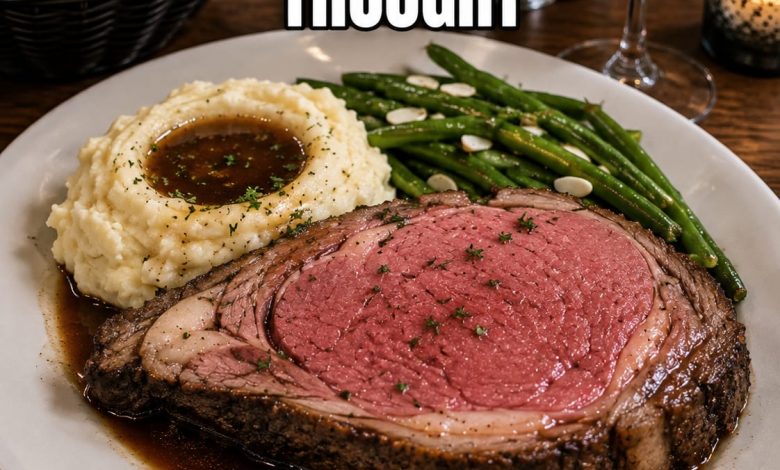
Garlic Herb Prime Rib with Au Jus
Introduction
Garlic Herb Prime Rib with Au Jus is a timeless centerpiece made for special dinners, holidays, Sunday gatherings, and any occasion when you want to serve something truly memorable. A well-prepared prime rib has everything you could want from a roast: a deeply seasoned exterior, rich beef flavor, beautiful marbling, and an incredibly tender, juicy center.
The secret is surprisingly simple. Rather than covering the beef with complicated ingredients, this recipe uses a savory mixture of butter, garlic, rosemary, thyme, salt, and black pepper to complement the natural flavor of the roast. Slow, controlled roasting helps the interior cook evenly, while a final blast of high heat creates a beautifully browned crust.
Served with creamy mashed potatoes, green beans, and homemade au jus, this prime rib becomes a classic steakhouse-style dinner you can prepare right in your own kitchen.
Ingredients
For the Prime Rib
1 bone-in prime rib roast, about 5–6 pounds (2.3–2.7 kg)
4 tablespoons unsalted butter, softened
ADVERTISEMENT
5 cloves garlic, finely minced
1 tablespoon fresh rosemary, finely chopped
1 tablespoon fresh thyme leaves
2 teaspoons kosher salt
1½ teaspoons freshly ground black pepper
ADVERTISEMENT
1 teaspoon onion powder
1 teaspoon garlic powder
1 tablespoon olive oil
For the Au Jus
Pan drippings from the roasted prime rib
1½ cups beef broth
ADVERTISEMENT
½ cup dry red wine or additional beef broth
1 tablespoon Worcestershire sauce
1 teaspoon Dijon mustard, optional
1 small shallot, finely chopped
1 garlic clove, minced
ADVERTISEMENT
Salt and freshly ground black pepper, to taste
For Serving
Creamy mashed potatoes
Garlic green beans
Prepared horseradish sauce
Fresh rosemary or thyme
Warm dinner rolls, optional
Preparation
1. Prepare the Prime Rib
Remove the prime rib from its packaging and pat the entire surface thoroughly dry with paper towels.
If possible, place the roast uncovered on a rack in the refrigerator overnight. This helps dry the exterior and encourages better browning during roasting.
When you’re ready to cook, remove the roast from the refrigerator approximately 1 hour before roasting.
ADVERTISEMENT
Pat it dry again if necessary.
2. Preheat the Oven
Preheat your oven to 250°F (120°C).
Place a roasting rack inside a sturdy roasting pan.
Cooking prime rib initially at a relatively low temperature encourages even cooking from the outer edges toward the center.
3. Prepare the Garlic Herb Butter
In a small bowl, combine the softened butter, minced garlic, rosemary, thyme, kosher salt, black pepper, onion powder, garlic powder, and olive oil.
Mix until everything forms a thick, fragrant herb butter.
The mixture should be soft enough to spread easily over the beef.
4. Season the Roast
Place the prime rib on the roasting rack with the fat side facing upward.
Rub the garlic-herb butter generously over the entire exterior.
Make sure you coat the top, sides, and ends of the roast.
Don’t be afraid to use your hands to press the herbs and seasonings firmly against the meat.
The seasoned exterior will eventually become the flavorful crust surrounding the tender beef.
Slow-Roast the Prime Rib
Place the roasting pan in the preheated oven.
Roast until the internal temperature reaches approximately:
115–120°F (46–49°C) for rare
120–125°F (49–52°C) for medium-rare
125–130°F (52–54°C) for medium
Because every roast and oven is different, use an instant-read or probe thermometer rather than relying exclusively on cooking time.
A roast of this size may require approximately 2½–3½ hours, but temperature should always be your primary guide.
Insert the thermometer into the thickest part of the beef without touching the bone.
Rest the Roast
Remove the prime rib from the oven once it reaches your desired temperature.
Transfer it to a cutting board and loosely tent it with aluminum foil.
Allow it to rest for approximately 25–30 minutes.
During this time, the internal temperature will continue rising slightly.
Resting is essential because it allows the juices inside the roast to redistribute throughout the meat.
Do not slice the prime rib immediately after removing it from the oven.
Create the Brown Crust
While the roast rests, increase the oven temperature to 500°F (260°C).
Once the oven is fully heated, remove the foil and return the prime rib to the oven.
Roast for approximately 5–8 minutes, watching carefully, until the exterior becomes deeply browned and beautifully crusted.
Remove the roast from the oven.
Because the meat has already rested, you can carve it relatively soon after this final browning step.
Prepare the Au Jus
While the prime rib is resting, prepare the savory au jus.
Carefully pour most of the excess fat from the roasting pan while leaving the flavorful browned bits and approximately 1 tablespoon of fat behind.
Place the roasting pan over medium heat if it’s stovetop-safe, or transfer the drippings to a saucepan.
Add the finely chopped shallot and cook for approximately 2 minutes.
Add the garlic and cook for another 30 seconds.
Pour in the red wine and scrape the bottom of the pan to loosen all those flavorful browned bits.
Allow the wine to simmer for approximately 2–3 minutes.
Add the beef broth and Worcestershire sauce.
Stir in the Dijon mustard if using.
Bring the mixture to a gentle simmer and cook for approximately 8–10 minutes, allowing the flavors to concentrate.
Taste and season with salt and freshly ground black pepper as needed.
For a smoother au jus, strain it before serving.
Carve the Prime Rib
If you’re using a bone-in roast, carefully remove the rib bones by cutting along their natural curve.
Save the bones—they contain plenty of flavorful meat and are excellent for serving or using later in soups and stocks.
Place the roast on a stable cutting board.
Using a long, sharp carving knife, slice the prime rib across the grain into thick portions.
For generous steakhouse-style servings, cut slices approximately ¾–1 inch thick.
Arrange them on a warmed serving platter.
Spoon a little warm au jus around the beef rather than drowning the beautifully browned surface.
Creamy Mashed Potatoes for Serving
Prime rib and mashed potatoes are a classic pairing.
For a simple version, boil peeled Yukon Gold or russet potatoes in salted water until fork-tender.
Drain thoroughly and return them to the warm pot.
Mash with butter, warm milk or heavy cream, salt, and black pepper until smooth and creamy.
For extra richness, add roasted garlic, sour cream, or a small amount of cream cheese.
Create a small well in the center of each serving of mashed potatoes and spoon in some of the warm au jus.
Garlic Green Beans
Fresh green beans provide a lighter contrast to the rich beef.
Blanch or steam the beans until crisp-tender.
Melt butter in a skillet and add thinly sliced garlic.
Cook briefly until fragrant, then add the green beans.
Season with salt and black pepper and toss until everything is evenly coated.
A squeeze of fresh lemon juice can brighten the finished vegetables.
Tips for Perfect Prime Rib
Choose a roast with visible marbling. Those thin streaks of fat running through the beef contribute greatly to tenderness and flavor.
Use a meat thermometer. Prime rib is an expensive cut, and temperature is far more dependable than estimating doneness based only on cooking time.
Roast with the fat side facing upward so the exterior fat renders as the beef cooks.
Don’t skip the resting period. Cutting too soon allows valuable juices to escape onto the cutting board.
Season generously. A large roast needs enough salt and herbs to flavor the substantial amount of meat beneath the surface.
The final high-temperature roast should be brief. You’re developing the crust, not significantly cooking the center again.
Optional Horseradish Cream Sauce
For a traditional steakhouse accompaniment, combine:
½ cup sour cream
2 tablespoons prepared horseradish
1 teaspoon Dijon mustard
1 teaspoon fresh lemon juice
¼ teaspoon salt
Freshly ground black pepper
Mix everything together and refrigerate for at least 20 minutes before serving.
The cool, tangy sauce provides a wonderful contrast to the rich prime rib.
What to Serve With Prime Rib
Prime rib pairs naturally with classic steakhouse side dishes.
Creamy mashed potatoes are excellent for catching the flavorful au jus, while green beans or roasted asparagus provide freshness and color.
You could also serve roasted potatoes, creamed spinach, glazed carrots, Yorkshire pudding, sautéed mushrooms, macaroni and cheese, or a crisp green salad.
Warm crusty bread or dinner rolls are another welcome addition for soaking up the remaining au jus.
Storage and Reheating
Store leftover prime rib in an airtight container in the refrigerator for up to 3–4 days.
Keep the au jus in a separate container.
When reheating, avoid very high temperatures because they can quickly overcook the rosy center.
Place slices of prime rib in a covered baking dish with a few spoonfuls of au jus and warm gently in a 275°F (135°C) oven until heated to your liking.
Leftover prime rib is also wonderful in sandwiches, steak and eggs, beef hash, quesadillas, or creamy pasta.
Conclusion
Garlic Herb Prime Rib with Au Jus is the definition of a classic special-occasion dinner. The combination of richly marbled beef, a deeply browned garlic-herb crust, tender rosy slices, creamy mashed potatoes, fresh green beans, and savory au jus creates a meal that feels straight out of a traditional steakhouse.
The most important parts of the recipe are simple: start with good beef, season it generously, cook it slowly, monitor the internal temperature, and give it enough time to rest. Follow those fundamentals and the natural flavor of the prime rib does most of the work.
When a thick slice of beautifully cooked prime rib arrives at the table surrounded by mashed potatoes and rich au jus, the first thought is usually pretty simple: When are we eating?