ADVERTISEMENT
Christmas Morning French Toast Casserole
Introduction
Christmas morning is one of the most magical times of the year, filled with warmth, laughter, beautiful decorations, and the wonderful aroma of something delicious baking in the oven. There is no better way to celebrate this special occasion than by gathering around the breakfast table with a homemade Christmas Morning French Toast Casserole that is golden, buttery, sweet, and wonderfully comforting.
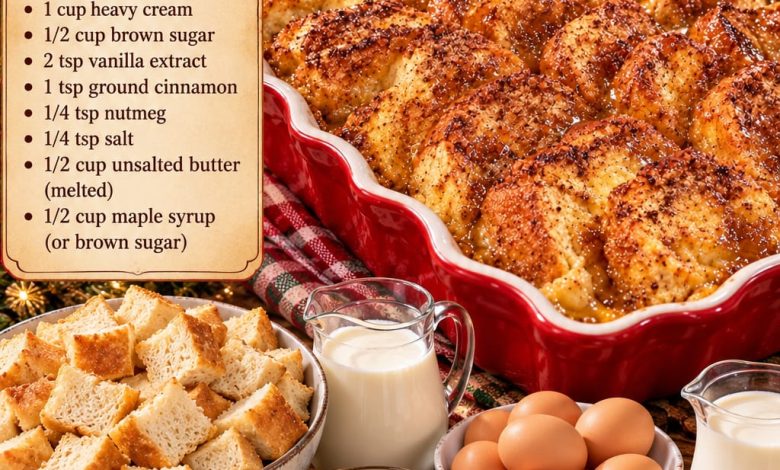
This delightful breakfast casserole combines everything people love about traditional French toast in one generous, easy-to-serve dish. Cubes of French bread are soaked in a rich vanilla custard made with eggs, whole milk, heavy cream, brown sugar, and warm holiday spices. As the casserole bakes, the bread becomes tender and creamy inside while developing a beautifully golden, lightly caramelized crust on top.
The combination of cinnamon, nutmeg, vanilla, melted butter, and maple syrup creates an irresistible flavor that captures the spirit of the holiday season. Every bite offers a delicious balance of soft, custardy bread, delicate sweetness, and slightly crisp golden edges.
One of the best things about this recipe is that it can be prepared the evening before Christmas. Instead of spending your entire morning cooking, you can assemble the casserole ahead of time, refrigerate it overnight, and simply bake it when everyone is ready for breakfast.
Whether you are hosting a large family gathering, enjoying a quiet Christmas morning at home, or preparing a festive holiday brunch, this French Toast Casserole is a wonderful way to create beautiful memories around the table.
ADVERTISEMENT
Ingredients
For the French Toast Casserole
1 loaf French bread, cut into bite-sized cubes
8 large eggs
2 cups whole milk
1 cup heavy cream
1/2 cup brown sugar, packed
ADVERTISEMENT
2 teaspoons pure vanilla extract
1 teaspoon ground cinnamon
1/4 teaspoon ground nutmeg
1/4 teaspoon salt
1/2 cup unsalted butter, melted
ADVERTISEMENT
1/2 cup pure maple syrup (or 1/2 cup additional brown sugar)
Optional Toppings for Serving
Extra warm maple syrup
Powdered sugar
Fresh strawberries
Fresh blueberries
ADVERTISEMENT
Whipped cream
A light sprinkle of ground cinnamon
Chopped toasted pecans or walnuts
Extra melted butter
Preparation Steps
Step 1: Choose and Prepare the French Bread
Begin by selecting a fresh loaf of French bread with a slightly firm crust and a soft interior.
For the best results, bread that is one day old works particularly well because it absorbs the custard without becoming overly soft.
Place the bread on a clean cutting board and use a sharp serrated knife to cut it into evenly sized cubes, approximately 1–1 1/2 inches wide.
Keeping the bread pieces relatively uniform ensures that they absorb the custard evenly and bake at a similar rate.
If your bread is very fresh and soft, spread the cubes on a large baking sheet and allow them to sit uncovered for several hours.
ADVERTISEMENT
Alternatively, place them in a 300°F (150°C) oven for approximately 10–15 minutes, stirring once, until the bread feels slightly dry but not browned.
This helps the bread maintain its texture while soaking up the rich egg mixture.
Allow the bread cubes to cool completely before assembling the casserole.
Step 2: Prepare the Baking Dish
Choose a large 9 × 13-inch baking dish, preferably one with deep sides.
Lightly grease the bottom and sides of the dish with butter or nonstick cooking spray.
Make sure the corners are coated to prevent the sweet custard from sticking during baking.
Arrange the prepared bread cubes evenly inside the baking dish.
Spread the pieces into a generous layer, distributing them from one corner to the other.
Avoid pressing the bread down too firmly because leaving a little space between the cubes allows the custard to flow naturally throughout the casserole.
Set the prepared baking dish aside while you make the custard.
Step 3: Prepare the Rich Vanilla Custard
Crack the 8 large eggs into a large mixing bowl.
Using a wire whisk, beat the eggs until the yolks and whites are completely combined.
Pour in the whole milk and heavy cream, whisking continuously until the mixture becomes smooth.
The combination of milk and cream creates a rich, velvety custard that gives this casserole its soft, luxurious interior.
Add the packed brown sugar and whisk until it is mostly dissolved.
Next, stir in the pure vanilla extract, ground cinnamon, ground nutmeg, and salt.
Continue whisking until all the ingredients are evenly distributed.
The cinnamon and nutmeg provide the warm, comforting aroma that makes this recipe especially wonderful for Christmas morning.
The finished custard should be smooth, creamy, lightly sweetened, and beautifully fragrant.
Step 4: Add the Maple Syrup and Melted Butter
Allow the melted butter to cool slightly so it is warm but not hot.
Pour the maple syrup into the prepared custard mixture.
Whisk gently until the syrup is fully incorporated.
Next, slowly drizzle in the melted butter while whisking continuously.
The butter adds a rich, homemade flavor and helps the casserole develop delicious golden edges as it bakes.
If you prefer to use brown sugar instead of maple syrup, whisk the additional 1/2 cup of brown sugar into the custard until well combined.
Make sure the butter is not too hot when added because excessive heat can begin cooking the eggs.
Continue stirring until the mixture is as evenly combined as possible. A little butter may float on the surface, which is normal.
Step 5: Pour the Custard Over the Bread
Slowly pour the prepared custard mixture over the bread cubes in the baking dish.
Begin at one end of the dish and work your way across, making sure every section receives a generous amount of liquid.
Use the back of a large spoon or a clean spatula to gently press the bread pieces into the custard.
This helps the bread absorb the creamy mixture and prevents dry spots from remaining inside the casserole.
Take special care to moisten the bread pieces around the edges and corners.
The bread will gradually begin absorbing the custard, becoming softer and more flavorful.
Avoid stirring aggressively because you want the bread cubes to retain their shape rather than break apart.
Step 6: Allow the Bread to Soak
Once the custard has been poured over the bread, allow the casserole to rest for approximately 15–20 minutes at room temperature if you plan to bake it immediately.
During this time, the bread will absorb much of the creamy egg mixture.
Every few minutes, gently press down on any exposed bread cubes to help them become evenly moistened.
For an even richer texture and deeper flavor, cover the baking dish tightly with plastic wrap or a fitted lid and refrigerate it overnight.
The extended soaking time allows the vanilla, cinnamon, nutmeg, and maple syrup to infuse the bread beautifully.
This overnight method is especially convenient for Christmas morning because almost all the preparation can be completed the evening before.
Step 7: Refrigerate Overnight for Make-Ahead Preparation
If preparing the casserole ahead of time, place the covered baking dish in the refrigerator for approximately 8–12 hours.
Keep it chilled at 40°F (4°C) or below throughout the soaking period.
As the casserole rests, the bread gradually absorbs the custard, creating a soft and creamy interior.
The spices also have time to blend with the vanilla and maple syrup, producing a deeper, more comforting flavor.
When you are ready to bake the next morning, remove the plastic wrap and inspect the casserole.
If a few bread pieces appear dry on top, gently press them into the custard.
Place the dish on the counter only while the oven preheats, avoiding prolonged time at room temperature.
Step 8: Preheat the Oven
Preheat your oven to 350°F (175°C).
Position the oven rack in the center to allow the casserole to bake evenly.
If using a ceramic or glass baking dish, follow the manufacturer’s guidance concerning temperature changes, particularly when transferring a refrigerated dish into a hot oven.
While the oven heats, prepare any optional toppings you would like to serve.
You can wash fresh berries, chop toasted nuts, or warm a little maple syrup.
The casserole should remain covered and refrigerated until close to baking time whenever possible.
Step 9: Bake the French Toast Casserole
Remove any plastic wrap and place the uncovered baking dish in the preheated oven.
Bake for approximately 45–55 minutes.
During the first part of baking, the custard will gradually set around the bread cubes.
As the casserole continues cooking, the bread on top will rise slightly and begin developing a beautiful golden-brown crust.
The brown sugar, maple syrup, and butter will contribute to a lightly caramelized surface, while the interior remains soft and tender.
If the top begins browning too quickly before the center is cooked, loosely cover the baking dish with aluminum foil.
Continue baking until the center is set and no longer appears wet or runny.
For food safety, an instant-read thermometer inserted into the center should register at least 160°F (71°C).
The exact baking time may vary depending on the depth of the baking dish, the type of bread, and whether the casserole was refrigerated overnight.
Step 10: Create a Beautiful Golden Finish
For a slightly crispier topping, leave the casserole uncovered during the final 5–10 minutes of baking, provided the surface is not becoming too dark.
Watch carefully as the top turns a rich golden brown.
The edges should appear gently caramelized, and the bread pieces on the surface should have a slightly crisp texture.
The interior, however, should remain soft and custardy.
Avoid overbaking because excessive cooking can cause the bread to become dry.
When the casserole is finished, remove it carefully from the oven and place the baking dish on a heat-safe surface.
Step 11: Allow the Casserole to Rest
Let the freshly baked French Toast Casserole rest for approximately 10–15 minutes before serving.
This short resting period allows the custard to finish setting and makes it easier to cut the casserole into attractive portions.
As it rests, the wonderful aromas of cinnamon, vanilla, butter, and maple syrup will continue filling the kitchen.
The casserole should feel tender in the center, with golden edges and a lightly crisp surface.
Resting also helps prevent the individual servings from falling apart when lifted from the baking dish.
Step 12: Prepare the Optional Toppings
While the casserole rests, prepare the finishing touches.
Warm a small amount of pure maple syrup in a saucepan over low heat or in a microwave-safe container.
If using powdered sugar, place a few tablespoons in a fine-mesh sieve.
Wash and dry fresh strawberries and blueberries.
If you enjoy a crunchy contrast, lightly toast chopped pecans or walnuts in a dry skillet over medium-low heat until fragrant.
For an indulgent finishing touch, prepare a little freshly whipped cream.
You can serve the toppings separately so everyone can customize their portion according to personal preference.
Step 13: Serve the Christmas Morning Casserole
Using a large serving spoon or spatula, divide the warm casserole into generous portions.
Transfer each serving to a breakfast plate.
Drizzle warm maple syrup over the top, allowing it to settle into the golden bread pieces.
For a festive presentation, sprinkle a light dusting of powdered sugar over the casserole.
Add a few fresh berries beside each serving to provide a refreshing contrast to the rich custard.
If desired, finish with a small spoonful of whipped cream or a sprinkle of toasted nuts.
Serve immediately while the casserole is warm and wonderfully fragrant.
Step 14: Enjoy with Family and Friends
Place the baking dish in the center of the breakfast table and allow everyone to help themselves.
This casserole pairs beautifully with freshly brewed coffee, hot chocolate, warm tea, fresh orange juice, or a glass of cold milk.
For a complete Christmas breakfast, serve it alongside scrambled eggs, fresh fruit, crispy breakfast potatoes, or your favorite savory breakfast dishes.
Its comforting flavor and generous portions make it an excellent centerpiece for a festive family brunch.
Helpful Tips for the Perfect French Toast Casserole
Use slightly stale bread. Day-old French bread absorbs the custard beautifully without becoming excessively soggy.
Cut the bread into even pieces. Uniform cubes help the casserole cook consistently and create a pleasing texture.
Use whole milk and heavy cream. This combination gives the custard its rich, creamy consistency and classic French toast flavor.
Choose pure vanilla extract. High-quality vanilla adds wonderful depth and complements the warm holiday spices.
Do not skip the soaking time. Allowing the bread to absorb the custard is essential for achieving a soft, flavorful interior.
Avoid overbaking. The casserole should have a set center and golden top without becoming dry.
Use real maple syrup when possible. Pure maple syrup provides a natural, distinctive sweetness that works beautifully with cinnamon and brown sugar.
Let the casserole rest before serving. A short resting period makes the portions easier to serve and improves the final texture.
Customize the toppings. Fresh berries, powdered sugar, whipped cream, or toasted nuts can make each serving even more special.
Delicious Recipe Variations
Cinnamon Pecan French Toast Casserole
Add 3/4 cup of chopped toasted pecans to the bread mixture before pouring in the custard.
The pecans provide a delightful crunch and a warm, nutty flavor that complements the cinnamon and maple syrup.
For extra texture, sprinkle a few additional pecans over the casserole before baking.
Apple Cinnamon Christmas French Toast Casserole
Peel and dice 2 medium apples and distribute them evenly among the bread cubes.
Sprinkle the apples with an additional 1/2 teaspoon of cinnamon before adding the custard.
As the casserole bakes, the apples become tender and release their natural sweetness, creating a delicious apple-pie-inspired variation.
Blueberry Vanilla French Toast Casserole
Scatter 1 cup of fresh blueberries throughout the bread cubes before adding the egg mixture.
The blueberries soften during baking and create little bursts of juicy fruit flavor.
This variation pairs especially well with powdered sugar and warm maple syrup.
Cream Cheese French Toast Casserole
Cut 6 ounces of softened cream cheese into small cubes and distribute them between the bread pieces.
During baking, the cream cheese creates rich, creamy pockets that make the casserole especially indulgent.
Serve with fresh berries for a delicious balance of sweetness and tanginess.
Orange Cinnamon Holiday French Toast Casserole
Add 1 tablespoon of freshly grated orange zest to the custard mixture.
The bright citrus aroma pairs beautifully with cinnamon, nutmeg, and vanilla, giving the casserole an especially festive flavor.
Chocolate Chip French Toast Casserole
Sprinkle 3/4 cup of semi-sweet chocolate chips throughout the bread cubes before adding the custard.
The chocolate melts slightly during baking, creating a sweet breakfast treat that children and adults can both enjoy.
Serving Suggestions
Christmas Morning French Toast Casserole is delicious enough to serve as the main attraction at a holiday breakfast, but it also pairs wonderfully with a variety of other dishes.
For a classic holiday brunch, serve generous portions with scrambled eggs, fresh fruit, and a selection of warm beverages.
If you prefer a combination of sweet and savory flavors, pair the casserole with turkey sausage, roasted breakfast potatoes, or crispy bacon.
For a lighter presentation, serve smaller portions alongside a colorful fruit salad made with strawberries, blueberries, oranges, and grapes.
For an extra-special holiday touch, arrange the casserole on a beautifully decorated breakfast table with warm maple syrup, powdered sugar, and bowls of fresh berries.
The golden casserole, warm spices, and festive toppings create a welcoming atmosphere that makes Christmas breakfast feel truly memorable.
Make-Ahead Instructions
This recipe is particularly convenient because it can be assembled the evening before serving.
Prepare the bread cubes, custard mixture, and baking dish according to the instructions.
Pour the custard evenly over the bread and gently press the pieces down to encourage absorption.
Cover the dish tightly and refrigerate overnight.
On Christmas morning, preheat the oven, uncover the casserole, and bake until golden and completely set.
This simple preparation method saves valuable time and allows you to enjoy the holiday morning with family instead of spending hours in the kitchen.
Storage and Reheating Instructions
Allow any leftover casserole to cool slightly after serving.
Transfer the leftovers to airtight containers or cover the baking dish tightly.
Refrigerate within 2 hours and store at 40°F (4°C) or below for up to 3–4 days.
To reheat individual portions, place them in a microwave-safe dish and warm until thoroughly heated.
For larger portions, cover the casserole with aluminum foil and reheat in a 325°F (165°C) oven until the center reaches 165°F (74°C).
If the casserole appears slightly dry, drizzle a small amount of milk or maple syrup over it before reheating.
For longer storage, wrap individual portions securely and freeze for up to 2 months for best quality.
Thaw frozen portions in the refrigerator overnight before reheating.
Recipe Information
Preparation Time: 20–25 minutes
Soaking Time: 20 minutes, or 8–12 hours overnight
Baking Time: 45–55 minutes
Resting Time: 10–15 minutes
Total Time: Approximately 1 hour 40 minutes for the same-day method, or overnight plus baking time
Servings: 10–12 portions
Difficulty: Easy
Cooking Method: Oven-baked
Best Served: Warm
Perfect For: Christmas breakfast, holiday brunch, family gatherings, and special weekend mornings
Conclusion
Christmas Morning French Toast Casserole is more than just a delicious breakfast recipe. It is a warm, comforting dish that brings the beautiful flavors of the holiday season directly to your family table.
With its golden-brown surface, soft vanilla-infused interior, rich buttery flavor, and wonderful combination of cinnamon, nutmeg, brown sugar, and maple syrup, this casserole offers everything that makes homemade French toast so special.
The contrast between the lightly crisp edges and tender, custardy center creates a satisfying texture that makes every bite memorable. A drizzle of warm maple syrup or a dusting of powdered sugar adds the perfect finishing touch, turning a simple breakfast into a festive holiday treat.
One of the most wonderful things about this recipe is the convenience of preparing it ahead of time. By assembling the casserole the night before, you can spend less time cooking and more time enjoying the excitement, laughter, and togetherness that make Christmas morning so meaningful.
Whether you are sharing breakfast with a large group of relatives, preparing a special meal for your children, or enjoying a peaceful holiday morning at home, this comforting casserole is a lovely way to begin the day.
The familiar aromas of warm cinnamon, vanilla, butter, and freshly baked bread create an inviting atmosphere that makes the kitchen feel especially welcoming.
With simple ingredients, easy preparation, and a beautifully golden finish, this Christmas Morning French Toast Casserole is a recipe you may find yourself returning to year after year.