ADVERTISEMENT
Homemade Slow Cooker Applesauce
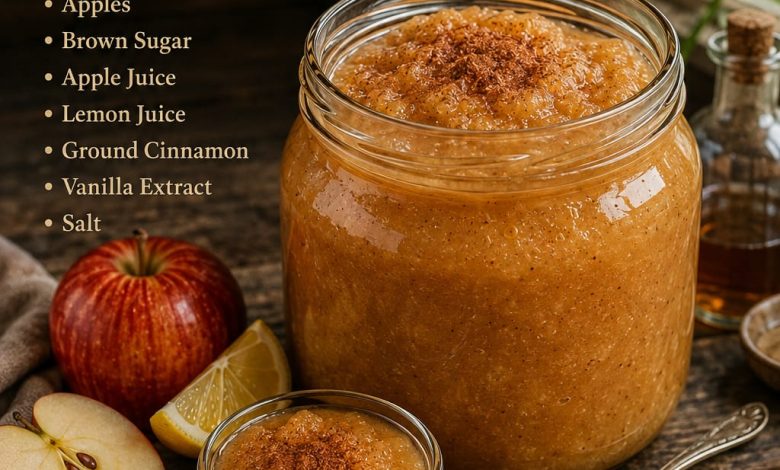
Homemade Slow Cooker Applesauce is a simple, comforting recipe that fills the kitchen with the warm aroma of apples and cinnamon. Slowly cooking fresh apples allows them to become naturally soft and sweet, while brown sugar, vanilla, lemon juice, and cinnamon create a rich homemade flavor. It’s delicious served warm or chilled and makes a wonderful breakfast side, snack, dessert topping, or accompaniment to savory meals.
Ingredients
8 medium apples, peeled, cored, and chopped
1/3 cup brown sugar, packed
1/2 cup apple juice or apple cider
2 tablespoons fresh lemon juice
1 teaspoon ground cinnamon
1 teaspoon vanilla extract
1/8 teaspoon salt
1/4 teaspoon ground nutmeg, optional
Preparation
1. Choose and Prepare the Apples
For the best flavor, use a combination of sweet and slightly tart apples. Gala, Fuji, Honeycrisp, Golden Delicious, and Granny Smith are all excellent choices.
Peel and core the apples, then cut them into roughly 1-inch chunks. Keeping the pieces approximately the same size will help them cook evenly.
2. Fill the Slow Cooker
Place all the chopped apples into the slow cooker.
ADVERTISEMENT
Pour the apple juice and fresh lemon juice over the apples. The apple juice provides extra moisture and sweetness, while the lemon juice adds brightness and helps balance the richness of the brown sugar.
3. Add the Sugar and Spices
Sprinkle the brown sugar, cinnamon, salt, and optional nutmeg over the apples.
Gently stir everything together until the apple pieces are evenly coated with the sugar and spices.
4. Slow Cook the Apples
Cover the slow cooker and cook on LOW for approximately 6–7 hours or on HIGH for about 3–4 hours.
Stir once or twice during cooking if convenient. As the apples cook, they will release their natural juices and gradually become extremely soft.
ADVERTISEMENT
The applesauce is ready when the fruit can easily be mashed with a spoon.
5. Add the Vanilla
Once the apples are completely tender, stir in the vanilla extract.
Adding vanilla toward the end of cooking helps preserve its warm, fragrant flavor.
6. Create Your Preferred Texture
For chunky applesauce, use a potato masher or large fork to gently mash the softened apples directly in the slow cooker.
For a smoother consistency, carefully use an immersion blender until the applesauce reaches your desired texture.
ADVERTISEMENT
If the applesauce seems too thin, cook it uncovered on HIGH for another 20–30 minutes, stirring occasionally, until some of the excess liquid evaporates.
7. Adjust the Flavor
Taste the finished applesauce while it is still warm.
Depending on the natural sweetness of your apples, you can add a little more brown sugar if desired. For a stronger fall-inspired flavor, sprinkle in additional cinnamon.
A small splash of lemon juice can also be added if you prefer a brighter, slightly tart finish.
Serving Suggestions
Homemade Slow Cooker Applesauce can be served warm immediately after cooking or refrigerated and enjoyed cold.
ADVERTISEMENT
Spoon it over pancakes, waffles, oatmeal, French toast, yogurt, or vanilla ice cream. It also pairs beautifully with roasted pork, baked chicken, or warm homemade biscuits.
For a simple dessert, serve warm applesauce with a sprinkle of cinnamon and a small scoop of vanilla ice cream.
Storage
Allow the applesauce to cool completely before transferring it to clean airtight containers or jars.
Keep it refrigerated and use within about one week. For longer storage, freeze portions in freezer-safe containers, leaving a little room for expansion.
Conclusion
Homemade Slow Cooker Applesauce transforms fresh apples and a handful of pantry ingredients into a wonderfully fragrant and comforting homemade treat. Slow cooking develops the natural sweetness of the fruit while cinnamon, brown sugar, lemon, and vanilla add layers of warm flavor.
Whether you enjoy it warm straight from the slow cooker, chilled as an easy snack, or spooned over your favorite breakfast or dessert, this homemade applesauce is a simple recipe worth making whenever fresh apples are plentiful.