ADVERTISEMENT
Traditional Italian Panettone with Candied Fruit and Raisins
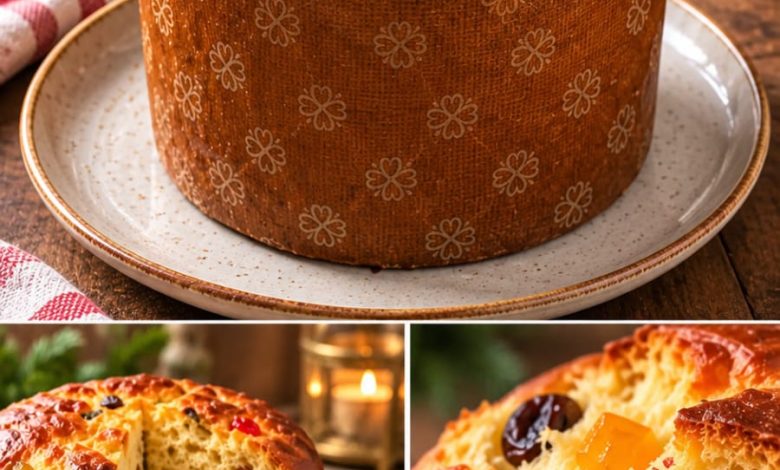
Traditional Italian Panettone is a beautiful celebration bread known for its tall shape, golden crust, incredibly light interior, and colorful pieces of candied fruit scattered throughout every slice. Enriched with butter, eggs, vanilla, citrus zest, and sweet dried fruit, this classic bread has a delicate richness while remaining wonderfully airy and tender.
Although panettone requires more patience than an ordinary cake, the result is well worth the extra time. The dough is allowed to rise slowly, which helps develop both its characteristic flavor and its soft, almost feathery texture. Bright candied orange and lemon peel add fresh citrus notes, while raisins provide little pockets of natural sweetness. It is especially wonderful during Christmas and holiday gatherings, but its rich flavor makes it worth preparing whenever you want a truly special homemade bake.
Ingredients
For the Fruit Mixture
1 cup raisins
1/2 cup candied orange peel, diced
1/2 cup mixed candied fruit, diced
1/4 cup candied cherries, chopped
2 tablespoons fresh orange juice
1 teaspoon finely grated orange zest
1 teaspoon finely grated lemon zest
1 teaspoon vanilla extract
For the Dough
4 cups bread flour, plus additional flour if needed
2 1/4 teaspoons active dry yeast
1/2 cup warm whole milk, about 105–110°F
1/2 cup granulated sugar
4 large eggs, at room temperature
2 large egg yolks
2 teaspoons pure vanilla extract
1 tablespoon honey
1 teaspoon salt
3/4 cup unsalted butter, softened and cut into small pieces
For Finishing
1 egg
1 tablespoon milk
A few pieces of candied fruit
A few raisins
1 tablespoon melted butter, optional
ADVERTISEMENT
Preparation
1. Prepare the Fruit
Place the raisins, candied orange peel, mixed candied fruit, and candied cherries in a medium bowl.
Add the orange juice, orange zest, lemon zest, and vanilla extract. Stir everything together until the fruit is evenly coated.
Allow the mixture to rest while you prepare the dough. This gives the dried fruit time to soften slightly and absorb some of the citrus flavor.
Before adding the fruit to the dough, drain away any excess liquid and gently pat the fruit dry with paper towels.
2. Activate the Yeast
Pour the warm milk into a small bowl.
ADVERTISEMENT
Add the yeast and approximately 1 teaspoon of the sugar. Stir gently and allow the mixture to stand for 5–10 minutes.
The yeast should become foamy on top. This indicates that it is active and ready to use.
Make sure the milk is warm rather than hot, as excessive heat can damage the yeast.
3. Begin the Panettone Dough
Place the bread flour, remaining sugar, and salt in the bowl of a stand mixer.
Mix briefly to distribute the ingredients.
ADVERTISEMENT
Add the activated yeast mixture, whole eggs, egg yolks, vanilla extract, and honey.
Using the dough hook attachment, mix on low speed until the ingredients begin forming a rough dough.
Continue kneading for approximately 5 minutes.
4. Add the Butter Slowly
With the mixer running on low to medium-low speed, begin adding the softened butter a few pieces at a time.
Allow each addition to become mostly incorporated before adding more.
ADVERTISEMENT
This process takes patience, but slowly incorporating the butter is important for developing the rich, elastic structure of traditional panettone.
Once all the butter has been added, continue kneading for approximately 10–15 minutes.
The dough should eventually become smooth, glossy, stretchy, and slightly sticky.
5. Check the Dough
Take a small piece of dough and gently stretch it between your fingers.
If it can stretch into a thin, almost translucent membrane without immediately tearing, the gluten has developed sufficiently.
If it tears very easily, continue kneading for several more minutes before checking again.
Avoid adding excessive flour simply because the dough feels sticky. Panettone dough is naturally softer and richer than ordinary bread dough.
6. First Rise
Transfer the dough to a lightly buttered bowl.
Cover the bowl with plastic wrap or a clean kitchen towel and place it in a warm, draft-free area.
ADVERTISEMENT
Allow the dough to rise until approximately doubled in size. Depending on the temperature of your kitchen, this can take 1 1/2–3 hours.
A slower rise is perfectly acceptable and can actually help develop better flavor.
7. Add the Candied Fruit and Raisins
Once the dough has doubled, gently press it down to release some of the accumulated gas.
Transfer it to a lightly greased work surface.
Spread the dough gently into a large rectangle and scatter the prepared fruit mixture across the surface.
Fold the dough several times to enclose the fruit.
Knead very gently until the raisins and candied fruit are distributed throughout the dough.
Take care not to tear the dough or crush the fruit excessively.
8. Shape the Panettone
Shape the dough into a smooth round ball.
Place it seam-side down inside a large panettone paper mold.
The dough should fill approximately one-third to one-half of the mold so there is plenty of room for the final rise.
Place the mold on a sturdy baking sheet before beginning the final proof.
9. Final Rise
Cover the panettone loosely and leave it in a warm place until the dough rises close to the top of the paper mold.
This stage can take approximately 2–4 hours depending on the strength of your yeast and room temperature.
Do not rush the final rise. Proper proofing is one of the keys to creating the tall, light, open interior that makes panettone so distinctive.
10. Prepare for Baking
Preheat the oven to 350°F (175°C).
In a small bowl, whisk together the egg and milk.
Very gently brush the exposed surface of the risen dough with the egg wash.
If desired, decorate the top with several raisins and colorful pieces of candied fruit.
Using a very sharp knife or razor blade, carefully score a shallow cross across the top of the dough.
You can place a small piece of butter in the center of the cross for additional richness.
11. Bake the Panettone
Place the panettone in the lower-middle portion of the preheated oven.
Bake for approximately 40–55 minutes.
Because panettone is tall, the top can brown considerably before the center has finished baking. If this happens, loosely cover the top with aluminum foil.
The bread is finished when it is deeply golden and the internal temperature reaches approximately 190°F (88°C).
12. Cool Completely
Traditional panettone is extremely delicate immediately after baking.
For the most authentic method, insert two long metal skewers horizontally through the bottom portion of the panettone and carefully suspend it upside down between two sturdy supports.
Allow it to cool completely upside down for several hours.
This unusual cooling technique helps prevent the tall, airy bread from collapsing under its own weight.
If you cannot suspend it, cool it carefully on a wire rack, although the final structure may be slightly different.
Serving Suggestions
Once completely cooled, remove the skewers and place the panettone upright.
Use a long serrated knife to cut it into tall wedges.
The interior should be soft, light, and delicately stringy, with colorful pieces of fruit and raisins distributed throughout.
Serve panettone at room temperature with coffee, espresso, tea, or hot chocolate.
For an especially indulgent dessert, lightly toast a slice and spread it with butter, mascarpone, or a little honey.
Leftover panettone also makes exceptional French toast or bread pudding.
Tips for the Best Panettone
Use bread flour rather than ordinary all-purpose flour when possible. Its higher protein content helps develop the strong gluten network needed to support the rich dough.
Make sure the eggs and butter are at room temperature before beginning.
Do not add all the butter at once. Gradual incorporation produces a smoother, stronger dough.
Be patient with both rises. Enriched dough containing butter, eggs, and sugar naturally rises more slowly than basic bread dough.
Avoid adding too much additional flour. The dough should remain soft and slightly sticky.
Make sure the dried fruit is not excessively wet before folding it into the dough.
Allow the panettone to cool completely before slicing. Cutting it while hot can compress its delicate interior.
Storage
Once completely cooled, store the panettone tightly wrapped or inside an airtight food-safe bag.
It will remain soft for several days at room temperature when properly sealed.
Individual slices can also be frozen. Wrap them securely and place them in a freezer-safe container. Allow them to thaw at room temperature before serving.
A slightly dry slice can be gently warmed or toasted, which brings back much of its wonderful buttery aroma.
Conclusion
Traditional Italian Panettone with Candied Fruit and Raisins is much more than an ordinary sweet bread. Its golden crown, delicate citrus aroma, buttery interior, and jewel-like pieces of colorful fruit make it a beautiful centerpiece for a holiday table.
The recipe does require patience, particularly during kneading and proofing, but those slow steps are what create the wonderfully light, tender, and pull-apart texture associated with a good panettone. Each tall slice reveals a soft golden crumb filled with raisins, candied citrus, and colorful fruit.
Whether you prepare it for Christmas morning, give it as a homemade holiday gift, or serve thick slices alongside coffee after a family meal, this traditional fruit-filled panettone brings warmth, color, and the unmistakable comfort of festive home baking to the table.