ADVERTISEMENT
Bread Pudding
Introduction
Bread Pudding is one of those timeless homemade desserts that turns simple pantry ingredients into something warm, rich, and wonderfully comforting. Cubes of day-old bread soak up a sweet vanilla custard made with whole milk, eggs, sugar, butter, and cinnamon, then bake until the top becomes beautifully golden while the center stays soft and tender.
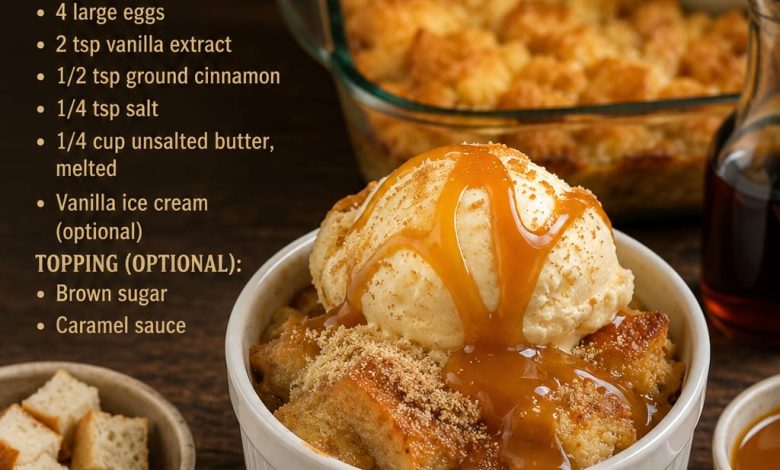
What makes this classic dessert especially irresistible is the contrast in textures. The edges become slightly crisp and caramelized in the oven, while the inside remains moist and custardy. Served warm with a scoop of creamy vanilla ice cream and a generous drizzle of caramel sauce, it becomes the kind of old-fashioned dessert that feels perfect for Sunday dinner, holidays, family gatherings, or a cozy evening at home.
Bread pudding is also wonderfully practical because slightly stale bread actually works better than fresh bread. The drier bread absorbs the custard without immediately falling apart, giving the finished pudding a satisfying texture and plenty of flavor in every bite.
Ingredients
For the Bread Pudding
6 cups day-old bread, cut into 1-inch cubes
2 cups (480 ml) whole milk
3/4 cup (150 g) granulated sugar
4 large eggs
2 teaspoons vanilla extract
1/2 teaspoon ground cinnamon
1/4 teaspoon salt
1/4 cup (57 g) unsalted butter, melted
Optional Toppings
Brown sugar, for sprinkling
Caramel sauce, for drizzling
Vanilla ice cream, for serving
Extra ground cinnamon, if desired
Preparation
1. Prepare the Oven and Baking Dish
Preheat the oven to 350°F (175°C).
ADVERTISEMENT
Lightly grease an 8 × 8-inch or similar medium-sized baking dish with butter or nonstick cooking spray.
If your bread is still very fresh and soft, spread the cubes on a baking sheet and leave them uncovered for a few hours. Alternatively, place them in a low oven for several minutes to dry them slightly.
Dry bread absorbs the custard much better than very fresh bread.
2. Prepare the Bread
Cut the day-old bread into approximately 1-inch cubes and place them in a large mixing bowl.
You can use a simple white loaf, French bread, brioche, challah, or another soft bread. Brioche will create an especially rich pudding, while ordinary sandwich or French bread will produce a more traditional home-style texture.
ADVERTISEMENT
Transfer the bread cubes to the prepared baking dish and spread them evenly.
3. Make the Custard
In a large bowl, crack in the eggs and whisk until the yolks and whites are completely combined.
Add the granulated sugar and continue whisking until well blended.
Pour in the whole milk, melted butter, and vanilla extract. Add the cinnamon and salt.
Whisk everything together until you have a smooth, evenly combined custard.
ADVERTISEMENT
The vanilla provides the dessert’s classic sweet aroma, while the cinnamon gives it a subtle warmth without overpowering the other flavors.
4. Soak the Bread
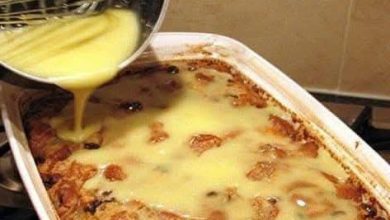
Slowly pour the custard mixture over the bread cubes, making sure to distribute it across the entire baking dish.
Using the back of a spoon or clean hands, gently press the bread down into the liquid so that every piece has an opportunity to absorb the custard.
Allow the bread to rest for approximately 15–20 minutes before baking.
This soaking period is important. It allows the custard to penetrate the center of the bread rather than remaining only around the outside.
ADVERTISEMENT
5. Add an Optional Brown Sugar Topping
For a sweeter, lightly caramelized surface, sprinkle a thin layer of brown sugar over the soaked bread immediately before baking.
You can also dust the surface with a small amount of additional cinnamon.
As the pudding bakes, the brown sugar melts into the upper pieces of bread and creates a delicious golden finish.
6. Bake the Bread Pudding
Place the baking dish in the center of the preheated oven.
Bake for approximately 40–50 minutes, or until the top is golden brown and the custard is set around the edges.
The center should be cooked but still moist and tender. A knife inserted near the center should come out mostly clean without raw liquid custard attached.
Avoid baking the pudding for much longer than necessary because overbaking can make it dry rather than soft and custardy.
7. Allow It to Rest
Remove the bread pudding from the oven and allow it to rest for approximately 10–15 minutes.
The pudding will continue to set slightly as it cools, making it easier to portion while maintaining its wonderfully soft interior.
ADVERTISEMENT
The aroma of warm vanilla, cinnamon, and caramelized bread should fill the kitchen at this point.
How to Serve Bread Pudding
Bread pudding is especially delicious when served warm.
Spoon a generous portion into an individual dessert bowl and add a scoop of vanilla ice cream on top. The cold ice cream will slowly melt over the warm pudding, creating a creamy sauce around the bread.
Finish with a generous drizzle of caramel sauce.
For an extra touch, sprinkle a little brown sugar or cinnamon over the ice cream before serving.
If you prefer something less sweet, the pudding is also delicious without ice cream. A small splash of heavy cream or warm milk poured over each serving makes a simple alternative.
Tips for Perfect Bread Pudding
Use slightly stale bread. Day-old bread absorbs more custard and helps prevent the finished pudding from becoming overly mushy.
Give the bread time to soak. Don’t pour the custard over the bread and immediately put it into the oven. A 15–20 minute rest produces a much more evenly moist texture.
Don’t overbake it. Good bread pudding should be golden on top but soft and custardy inside.
Use room-temperature eggs when possible. They blend more easily into the milk mixture and help create a smoother custard.
Serve it warm. Although bread pudding can be eaten cold, gently warming it before serving brings back its soft texture and enhances the vanilla and cinnamon aromas.
Delicious Variations
Once you’ve mastered the basic recipe, there are plenty of simple ways to customize it.
For a fruitier version, add raisins, dried cranberries, diced apples, or chopped peaches between the bread cubes before adding the custard.
Chocolate lovers can scatter chocolate chips throughout the bread mixture.
For additional texture, chopped pecans or walnuts can be added before baking.
You can also replace part of the whole milk with heavy cream for an even richer and more decadent custard.
No matter which variation you choose, the basic combination of bread, milk, eggs, vanilla, sugar, and butter provides an excellent foundation.
Storage and Reheating
Allow leftover bread pudding to cool before covering it tightly and placing it in the refrigerator. It can be refrigerated for approximately 3–4 days.
To serve it again, warm individual portions gently in the microwave or reheat the baking dish in a low oven until the pudding is heated through.
Add the ice cream and caramel sauce only after reheating so the toppings remain fresh.
Conclusion
Bread Pudding proves that some of the most satisfying desserts are made from the simplest ingredients. Day-old bread is transformed by a creamy vanilla-cinnamon custard into a golden dessert with crisp edges, a tender center, and rich homemade flavor throughout.
The warm pudding is delicious by itself, but adding vanilla ice cream and caramel sauce takes it to another level. The cold, creamy ice cream melting into the warm custard-soaked bread creates a wonderful combination of temperatures and textures.
Whether you’re using leftover bread or simply craving an old-fashioned comfort dessert, this Bread Pudding is an easy recipe worth keeping. Serve it fresh from the oven, add that irresistible scoop of vanilla ice cream and caramel drizzle, and enjoy a warm, comforting dessert that’s made for sharing.